We like internet service, the cloud, online food delivery services, and, yes, AI. Why don't we like data centers again?
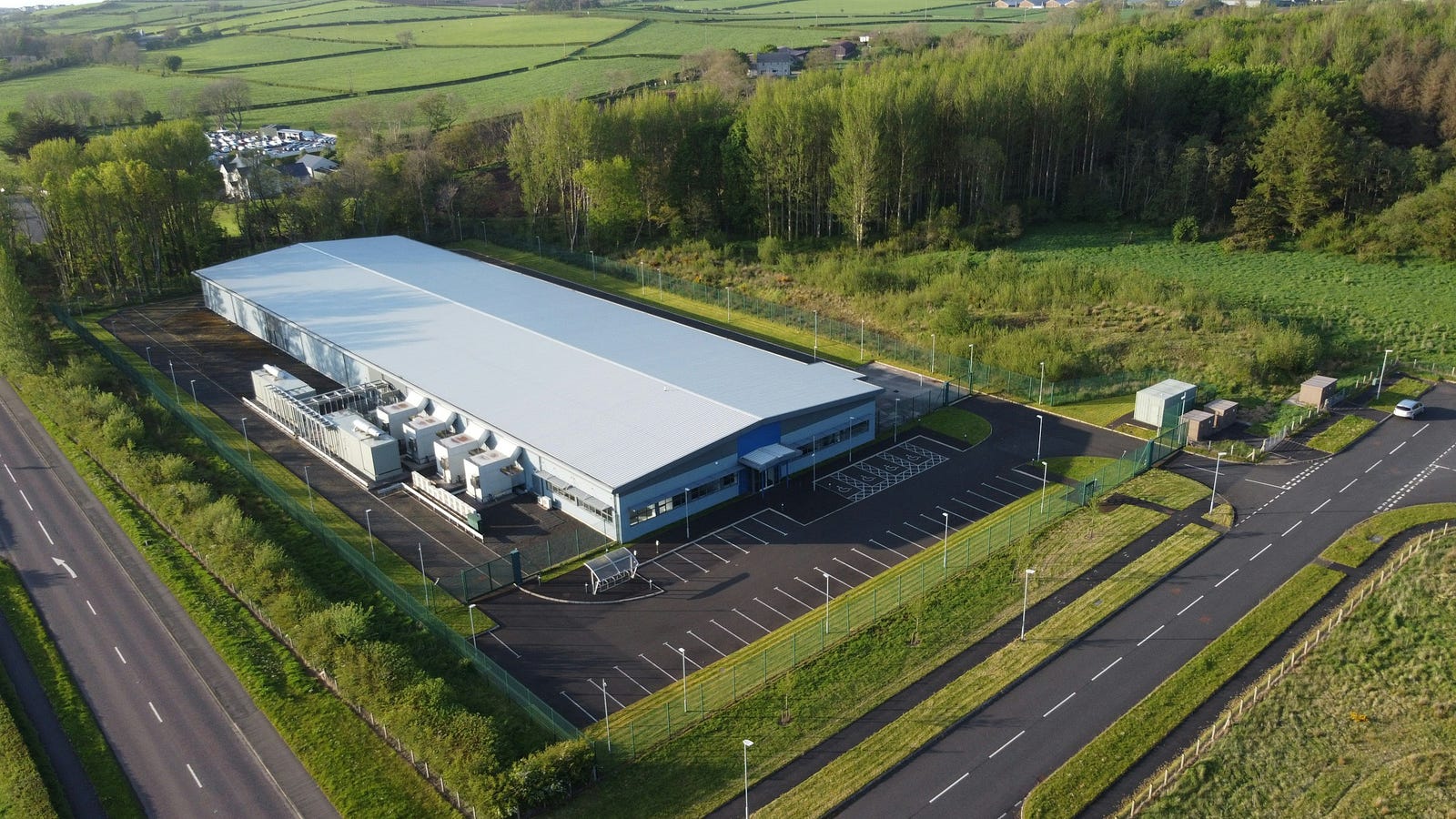
Data centers are enormous buildings filled with servers, cooling systems, electrical equipment and miles of cable. They make possible nearly everything we do online: banking, streaming, navigation, medical records, shopping, communication, cloud storage and artificial intelligence.
Most Americans like those things.
But increasingly, they do not like the buildings that make those things possible.
Across the country, communities are fighting new data centers. Lawmakers are proposing moratoriums. Activists warn about water consumption, electricity demand, pollution, noise, disappearing jobs and corporate power. Bernie Sanders and Alexandria Ocasio-Cortez want to suspend construction of major AI data centers until Congress resolves a sprawling list of concerns about employment, energy, inequality and technology.
The arguments sound new. They are not.
Nearly every major technological advance has faced some version of the same indictment. Machines will displace workers. New industries will destroy old ones. Infrastructure will consume too many resources. Communities will change. Wealth will accumulate in unfamiliar places. Society will not be ready.
If those objections had always prevailed, modern civilization would scarcely exist.
Mechanized agriculture displaced farm labor. Factories disrupted craftsmen. Railroads consumed land and threatened older transportation businesses. Electricity required dangerous generating plants and transmission lines. Automobiles displaced carriage makers and transformed cities. Computers eliminated entire categories of clerical work.
Each transition imposed real costs. Each also made human beings vastly more productive.
That productivity produced cheaper goods, higher living standards, modern sanitation, advanced medicine and the wealth necessary to address problems that poorer societies simply endured. In much of the preindustrial world, life expectancy at birth hovered around 30 to 40 years, largely because so many children died young. Progress was not painless, but stagnation was deadly.
The modern data-center debate often repeats the same mistake: treating the costs of transition as an argument against the transition itself.
Yes, data centers consume electricity. So do hospitals, factories, laboratories and universities. Yes, they use water. So do farms, golf courses, semiconductor plants and nearly every productive enterprise. “It consumes resources” is not, by itself, an argument against building something.
The proper question is whether the value created justifies the resources consumed — and whether the company creating that value is paying its own way.
A data center attached to an already strained grid, subsidized by residential ratepayers and granted decades of tax exemptions may be a bad deal. A facility built on industrial land, supplied by new generation and required to pay for transmission, water and local infrastructure may be an excellent one.
Data centers can generate substantial construction employment, property-tax revenue and demand for electricians, engineers, fiber installers and technology contractors. They do not employ as many permanent workers as automobile plants once did. But neither do power stations, ports or telecommunications exchanges. Infrastructure should be judged partly by the economic activity it enables, not merely by the number of people standing inside the building.
Some communities have used data-center tax revenue to lower property-tax rates and finance public services. Others have negotiated weak agreements, surrendered too much revenue or failed to protect nearby residents from noise and construction disruption.
That is an argument for better negotiation, not prohibition.
The same is true of electricity prices. A data center can raise rates when utilities must rapidly construct new generating plants and transmission lines. But a large customer can also spread fixed grid costs across more electricity sales and help finance improvements that benefit everyone.
The solution is straightforward: require major data centers to fund the power and delivery infrastructure they need, sign long-term contracts and continue paying for capacity even if their plans change. Do not leave families holding the bill for abandoned corporate ambitions.
America also cannot ignore the international stakes. Artificial intelligence will continue developing whether American activists approve of it or not. China is not going to suspend computing infrastructure while the United States holds hearings about whether technological disruption feels fair.
A national data-center moratorium would not stop AI. It would merely influence where AI is built, who controls it and whose values govern it.
None of this means every data-center project deserves approval. Environmental rules, noise limits, honest tax agreements and ratepayer protections are necessary. But regulation should shape progress, not strangle it.
We cannot demand instantaneous internet service, limitless cloud storage, online deliveries and increasingly sophisticated AI while treating the physical infrastructure behind them as an intolerable intrusion.
The cloud is not floating above us. It is sitting somewhere on the ground.
The choice is not between data centers and a world without AI. It is between building the future responsibly in America and watching someone else build it somewhere else.
(Contributing writer, Brooke Bell)